
Category: New/Upcoming Releases
Posts talking about newly released or upcoming LearnKey courses.
Why I Brought LearnKey’s LIFT UP Series to Loxis™
LearnKey’s LIFT UP Professional Development Series now runs inside Loxis, so leadership training finally connects to how your people actually work.

It’s About Time™
Short version: LearnKey’s LIFT UP Professional Development Series is now available through Loxis, the organizational intelligence platform I co-founded with Lori Coruccini and Simon Chatfield. Twelve courses, two tracks, connected to behavioral data about how your people actually work. Here’s why I moved the LIFT UP Professional Development Series there.
You know that feeling when you finish a training course, click “complete,” and go right back to doing your job exactly the way you did it yesterday?
I do. And honestly, I’ve spent a big chunk of my career on the other side of that screen. I’m the CEO of LearnKey. We build training. So it’s a little uncomfortable for me to admit this, but here it is: a lot of corporate training doesn’t change much. Not because the content is bad. Because it’s disconnected.
The course doesn’t know who you are. It doesn’t know what your team is trying to accomplish this quarter. It doesn’t know that you’re brilliant at starting things and kind of terrible at finishing them… or the other way around. It just shows up, gets checked off, and disappears into a completion report.
That’s the problem I wanted to fix. And it’s why I’m genuinely excited to share that LearnKey’s LIFT UP Professional Development Series, which we already deliver as SCORM courses for your own LMS, is now available in one place through Loxis.ai, the organizational intelligence platform I co-founded.
Here’s the belief underneath all of it, and it’s one we share at both companies: people are at the core of every business that works, and culture decides how well those people work together. Training should serve that. Not the other way around.
So what is Loxis, really?
Think about how most companies “see” themselves today. Finance has its dashboards. HR has its employee records. The learning system holds the training. Somebody runs an engagement survey once a year, and the results live in a slide deck nobody opens again.
Each of those is useful. But they don’t talk to each other. It’s like having a doctor, a dentist, and a physical therapist who’ve never once compared notes about the same patient.
Loxis connects them. It’s an AI-driven platform that pulls together four things:
- Know the Business. What’s actually going on inside the organization, including what employees are telling you.
- Know the Market. What your competitors and your industry are doing out there.
- Know the Plan. Your strategy, mapped down to goals, structure, and who’s accountable for what.
- Know the People. How your folks naturally work, how teams fit together, and where they need to grow.
And once you can see all of that side by side, you start finding gaps. Skills people don’t have yet. That’s exactly where upskilling the people you already have comes in, and that’s where LearnKey fits.
People aren’t interchangeable parts
This is the part I care about most.
Picture two people on the same project. One of them walks into the kickoff meeting already pitching three ideas and has made two new friends by lunch. The other one quietly builds the spreadsheet that keeps the whole thing from falling apart, and actually hits every deadline.
Who’s more valuable? Trick question. You need both. But if you hand the spreadsheet to the idea person and put the spreadsheet person in front of the client… you’ll get frustration from both of them, and probably a worse result.
That’s what behavioral science does for you. It explains how people naturally approach their work: how they communicate, make decisions, handle pressure, and get along with others. Loxis puts those patterns in front of leaders, both for individuals and for whole teams.
Now, I want to be clear about something, because I’ve seen this go wrong. A behavioral profile is not a sorting hat. It doesn’t replace someone’s experience, their qualifications, what they actually want to do, or a good manager’s judgment. It’s one more lens. A pretty powerful one, in my opinion. But a lens, not a verdict.
One more thing belongs right here, because almost nobody accounts for it. Someone can be perfectly qualified for a job and still be running on fumes. You know the type. Great résumé, right skills, and you can just tell they’re dragging. Their camera’s off. Their answers get shorter. Six months later they’re gone, and everybody acts surprised. Knowing how a person is built tells you nothing about how that person is doing. Pay attention to both.
The goal is simple: let people do more of what they’re naturally good at, give them room to grow into the rest, and notice when the tank is empty before it’s an exit interview.
“Nice to have”? The numbers say otherwise
I’ve sat in plenty of budget meetings where training was the first thing on the chopping block. It’s treated like a perk. Free snacks for the brain.
But look at what the research actually says.
Engagement is in rough shape, and it’s expensive. Gallup’s 2026 State of the Global Workplace report found only 20% of employees worldwide were engaged at work in 2025. One in five. Gallup estimates the cost of low engagement at roughly $10 trillion in lost productivity, about 9% of global GDP measured against 2024 output. That’s a modeled figure rather than a measured one. It’s also not a rounding error.
And engaged teams perform better. A lot better. In Gallup’s Q12 meta-analysis, business units in the top quartile of engagement, compared with the bottom quartile, showed:
- 23% higher profitability
- 18% higher sales productivity, measured by sales
- 14% higher productivity, measured by production records and evaluations
- 10% higher customer loyalty and engagement
- 21% lower turnover in high-turnover organizations, and 51% lower in low-turnover ones
Quick honesty check: those are median differences between business units, and they’re associations, not promises. No platform, ours included, can guarantee you a 23% profit bump. But when the gap is that big and that consistent, you’d be foolish to ignore it.
The skills clock is ticking. The World Economic Forum’s Future of Jobs Report 2025 (WEF) estimates 59 out of every 100 workers will need training by 2030—and that 11 of those 59 probably won’t get it. That’s over 120 million people at medium-term risk of being left behind. Meanwhile, 85% of employers say they plan to prioritize upskilling, and 63% call skills gaps a major barrier to transforming their business.
Now, I’d love to tell you the fastest-growing skills are the human ones. They aren’t. WEF puts AI and big data at the top, followed by cybersecurity and networks, then general technological literacy. Technical skills are climbing faster than anything else.
But look at what employers say they need right now. Resilience, flexibility and agility ranks second on that list, behind only analytical thinking, with 67% of employers naming it. WEF also calls that cluster the clearest dividing line between job roles that are growing and job roles that are shrinking. So the human skills aren’t a consolation prize. They’re the thing that determines whether your people can absorb all that technical change without breaking.
Most companies can’t move their talent fast enough. LinkedIn’s 2026 Talent Velocity Advantage Report puts 86% of companies below its bar for “talent velocity”: knowing what skills they have, building the ones they need, and moving people where they’re needed. The leaders averaged a 28-point edge across four confidence measures, including holding onto critical talent and lining people up with shifting priorities. Fair warning on that one: it’s LinkedIn’s own yardstick, scored from a survey of talent professionals rating their own organizations, and LinkedIn sells training. I still think the direction is right.
Here’s my takeaway from all of it. You can’t just hire your way out of every change. It’s too slow and too expensive. At some point you have to grow the people you already have. And to do that well, you have to actually know them.
Leading Myself: leadership isn’t a job title
The LIFT UP Professional Development Series has two halves, and I want to start with the one people tend to overlook.
Most leadership training goes to managers. Which makes sense, sort of. But think about the customer service rep who owns a messy problem instead of passing it along. Or the project teammate who keeps everybody calm and informed when things go sideways. Or the person who spots a broken process and just… fixes it.
That’s leadership. None of them have “manager” anywhere in their title.
Leading Myself is built for those people. Every individual contributor in your company. It’s five courses:
- My Success Drivers. Understanding your own strengths, stressors, motivators, and values, and how you actually feel about your work. It all starts with self-awareness.
- Building Self-Trust and Credibility. Confidence that’s earned, and how your beliefs about yourself shape what you do.
- Action Toward Accountability. Owning your stuff. Focusing on solutions instead of blame.
- Resilience. Emotional intelligence and practical ways to roll with change instead of getting flattened by it.
- Effective Communication and Productive Conversations. Listening, asking better questions, and handling disagreements without wrecking relationships.
Here’s why this matters to me. Culture isn’t something the executive team announces at an all-hands. Creating culture as a leader happens in a thousand small moments: how coworkers talk to each other, how they handle a disagreement, whether they keep their promises. If you only train the managers, you’re only working on a small slice of those moments.
And there’s a bonus. Train your individual contributors well, and you’ve quietly built your next bench of leaders.
Leading Others: because managers make or break it
Okay, now the managers. Because they matter enormously.
Gallup has put it the same way for years: managers account for at least 70% of the variance in engagement scores across business units. Seventy percent. They restated that figure as recently as September 2026. It’s Gallup’s own research rather than independently replicated work, so hold the exact number loosely—but ask anyone who’s worked for a bad manager whether it feels wrong. Your manager is basically the weather system you work inside of. Sunny, stormy, or that weird drizzle that never quite stops.
And yet most managers got promoted because they were good at the job before managing, not because anyone taught them how to manage. That’s like making your best swimmer the lifeguard and never showing them CPR.
Leading Others covers that gap with seven courses for new, experienced, and future managers:
- Maintaining Employee Engagement. Reading what each person needs and adjusting how you lead them.
- Building Cohesive Teams. Understanding your team’s strengths, stressors, motivators, and values.
- Delegating Work Effectively. Handing off work clearly, and using delegation to grow people, not just offload tasks.
- Navigating Conflict Effectively. Spotting conflict early and steering it somewhere productive.
- Delivering Constructive Feedback. Having the hard conversation in a way that actually helps.
- Working and Managing in a Virtual Workplace. Trust, communication, and productivity when your team is a grid of faces on a screen.
- Creating an Inclusive Culture. Making sure people feel respected and actually heard.
Pair those with what Loxis shows a leader about how their team fits together, and a manager isn’t guessing anymore. They can see how their team fits together, and they’ve got the tools to do something about it.
What my co-founder Simon says
Simon Chatfield, my fellow Loxis co-founder and the Founder and CEO of OptimumHQ, put it better than I could:
“The greatest opportunity companies have is not simply finding better employees, but better understanding and developing the people they already have. Leadership training is critical, and LearnKey’s Leading Others series helps managers build the skills to lead successful teams. But equally important is investing in individual contributors through the Leading Myself series. Every employee influences culture, productivity, and results. By combining behavioral intelligence with professional development, Loxis helps businesses put the right people on the right goals and gives those people opportunities to grow. When employees succeed, the organization succeeds.”
That first line is the one that sticks with me. Everybody’s chasing the perfect hire. Meanwhile the people who’d thrive with a little understanding and investment are already sitting right there on your payroll.
What this looks like in real life
Let me make this concrete.
Say your company is launching a new product. Sales, marketing, operations, customer service, and tech all have to pull together. The usual way to staff it? Grab whoever’s in the right department and has a free calendar.
That’s how you end up with a launch team that looks great on an org chart and grinds like a rusty gear in practice.
The fix isn’t complicated, but it does take information you probably don’t have in front of you. Before you staff the thing, understand how these particular people work. Who drives things forward. Who catches the details. Who keeps the peace when the schedule slips. Then look honestly at where the gaps are—and that’s where the LIFT UP Professional Development Series plugs in:
- The manager who keeps doing everything herself? Delegating Work Effectively.
- The team that keeps talking past each other? Effective Communication and Productive Conversations.
- The folks getting whiplash from shifting priorities? Resilience, or Action Toward Accountability.
One caution, though. We’re not saying “your profile says X, so take course Y.” That would be lazy. The point is to combine the behavioral insight with what employees tell you, what skills the work actually needs, and what the business is trying to accomplish. Then the training means something, because it’s aimed at real work.
Know Me, Grow Me, Include Me, Inspire Me℠
Culture isn’t your mission statement on the break-room wall. It’s how people actually treat each other on a Tuesday afternoon when a deadline is slipping.
And it pays, at least as far as anyone can measure it. McKinsey research from April 2025 found that companies in the top quartile of organizational health delivered about three times the shareholder returns of those in the bottom quartile. Organizational health, in their terms, is basically how well a company lines up behind a strategy, executes it, and adapts. I’ll add the caveat that this is a correlation drawn from their own survey database, without controls. Healthy companies and successful companies tend to be the same companies, and the arrow plausibly runs both ways.
At Loxis, we boil what employees want down to four simple asks, adopted from a framework used by Know Your Talents:
- Know Me. Understand my strengths, my style, and what I could become.
- Grow Me. Invest in my development and my career.
- Include Me. Notice what I contribute and actually hear my voice.
- Inspire Me. Connect my work to something that matters.
If you’ve ever been an employee, you already know these are true. LIFT UP lives squarely in Grow Me. Loxis ties that growth back to the other three: your strengths, your team, and the goals that make the work feel worth doing.
We describe the outcome as People-Positive, Productive, and Profitable. I like that it doesn’t pick a side. Employees want meaningful work and a chance to grow. Employers need results. Those two things aren’t enemies. Done right, they feed each other.
Why the three of us built this together
Loxis was founded by three people coming at the same problem from three different directions: Lori Coruccini, founder of Know Your Talents; Simon Chatfield, founder and CEO of OptimumHQ; and me.
- Know Your Talents brings the behavioral science. Understanding how people tick, how teams gel, and how culture gets built.
- LearnKey brings decades of building training, from technology education to professional development.
- OptimumHQ brings the adaptive software that Loxis runs on.
We kept seeing the same thing over and over. Companies treat assessments, training, and strategic planning as three separate chores, run by three different departments, in three different systems. It’s like three people each holding one piece of a map and never laying them down on the same table.
Loxis lays the map down. LIFT UP is the part that helps people actually walk the route.
Questions I get asked a lot
LearnKey’s LIFT UP Professional Development Series is now available through Loxis, so training connects directly to your people’s strengths, your culture, and your business goals.
Because everybody influences culture, productivity, and teamwork. Self-awareness, accountability, resilience, and communication help everyone, title or not.
Leading Myself builds personal effectiveness for employees at every level. Leading Others builds management skills: engagement, delegation, team building, feedback, conflict, and inclusion.
It can give you much better information about how people are doing, what they’re good at, what they need, and whether they’re lined up with the right goals. Whether retention improves depends on what you do with that information. I won’t pretend otherwise.
Set a baseline, train, then compare. Track engagement, retention, productivity, customer satisfaction, leadership effectiveness, and goal achievement, and keep in mind that training isn’t the only thing moving those numbers.
Start with one team
I’ll leave you with this.
Most companies will happily spend six figures on new software without blinking, then argue for weeks over a training budget. I get it. Technology feels concrete. People feel… fuzzy.
But the software doesn’t execute your strategy. People do. And they do it a whole lot better when somebody has taken the time to understand them, help them grow, and show them how their work connects to something bigger.
It’s about time businesses invested in understanding their people as much as they invest in their technology.
If you want to start small, here’s my suggestion. This week, pick one team. Ask yourself honestly whether you know what each person on it is naturally great at, and where each one is quietly struggling. If you can’t answer that, you’ve just found your starting point.
The LIFT UP Professional Development Series won’t fix a broken culture on its own; no course series will. What it does is give everyone a shared language for self-awareness, accountability, and communication, and give managers something better than instinct. Run it on a platform that already knows how your teams are built, and professional development stops being a completion report.
When you’re ready to go further, explore the LIFT UP Professional Development Series, call 800.865.0165, or email clientservices@learnkey.com about the courses. I’d genuinely love to hear what you find. And if you want to see how the LIFT UP Professional Development Series maps to the people you already have, request a Loxis demo.
— Jeff Coruccini, CEO of LearnKey and Co-Founder of Loxis
Sources
- Gallup, 2026. State of the Global Workplace: 2026 Report. Global engagement for 2025; estimated productivity losses based on 2024 output.
- Gallup, 2024. Q12 Employee Engagement Meta-Analysis, 11th Edition. Median differences between top- and bottom-quartile business units in profitability, productivity, retention, and customer outcomes. Gallup notes the analysis does not directly address causality.
- World Economic Forum, 2025. The Future of Jobs Report 2025. Skills growth and importance rankings, training needs, and employer upskilling priorities through 2030.
- LinkedIn, 2026. Talent Velocity Advantage Report. Survey of 1,240 talent professionals scored against LinkedIn’s own Talent Velocity Curve.
- McKinsey & Company, April 2025. Searching for Sustained Success? Focus on Organizational Health. Correlation between organizational health quartile and shareholder returns.
- Gallup, September 2026. How Can Leaders Improve Employee Engagement and Company Culture?. Restates Gallup’s finding on managers and variance in team engagement.
LearnKey’s New Interactive Glossary Elevates Active Learning and Student Outcomes
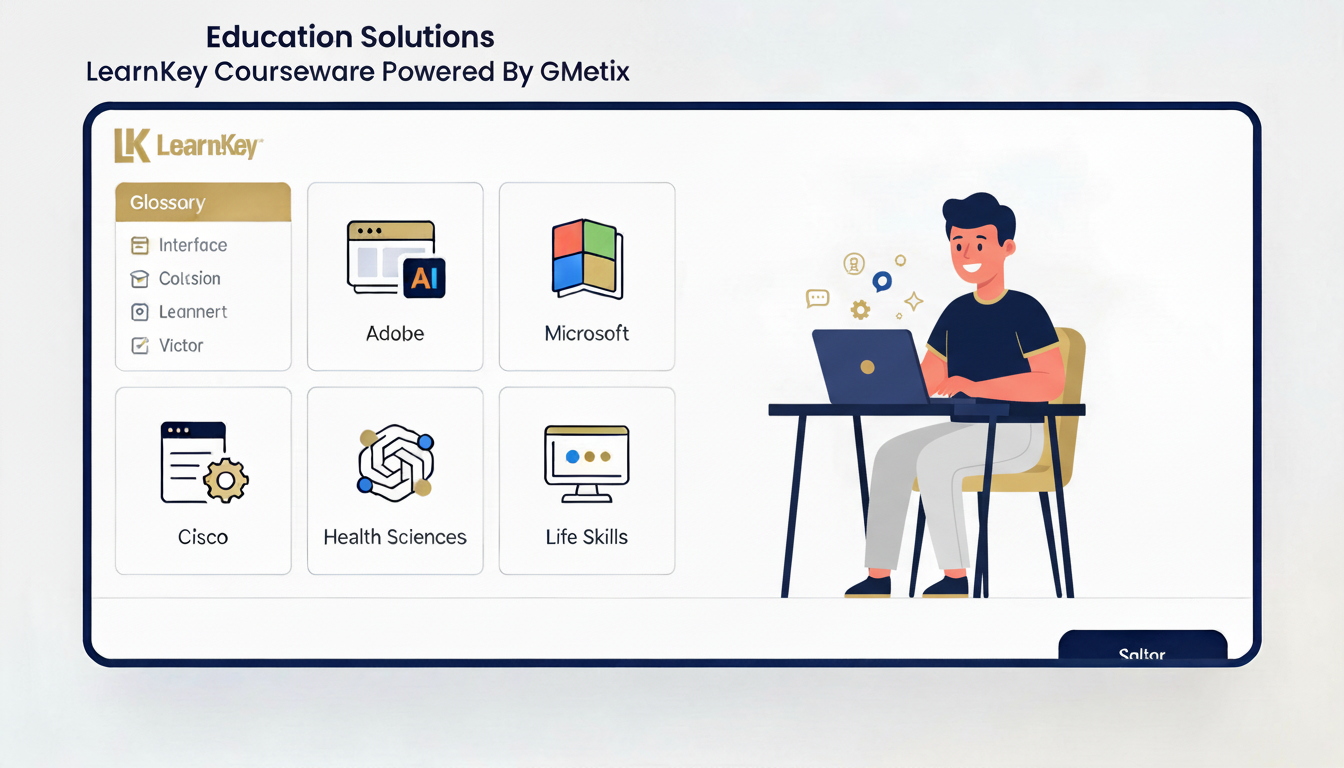
Digital education continues to evolve rapidly, but one truth has become increasingly clear: interactive online learning produces stronger student outcomes than passive consumption of content. As learners demand more engaging, efficient, and practical educational experiences, organizations that embed active learning tools into their course ecosystems gain a measurable advantage. This is exactly where LearnKey is raising the bar with the launch of its new Interactive Glossary.
Why Active Learning Matters More Than Ever
The Challenge of Technical Language in Online Learning
- Cognitive flow is broken.
- Context is lost
- Frustration increases
- Engagement drops
What Makes LearnKey’s Interactive Glossary Different
- Clear, learner-friendly definitions
- Industry-aligned terminology
- Certification-relevant language
- Consistent instructional tone across courses
Active Learning in Action: Vocabulary as a Learning Accelerator
- Reinforcing terminology at the point of need
- Supporting contextual understanding
- Reducing cognitive load
- Encouraging repeated exposure through use
The Measurable Impact on Student Outcomes
- Higher course completion rates
- Improved confidence in navigating complex topics
- Stronger assessment performance
- Better exam readiness
Strengthening Exam Readiness on the GMetrix Platform
- Aligning vocabulary with exam objectives
- Clarifying technical terms used in practice tests
- Reducing exam anxiety caused by unfamiliar language
- Improving comprehension during scenario-based questions
Value Creation for Students
- Faster understanding of complex concepts
- Reduced frustration and cognitive overload
- Increased engagement with the course material
- Higher likelihood of exam success
Strategic Value for LearnKey
- Demonstrating commitment to evidence-based learning design
- Improving learner satisfaction and outcomes
- Supporting partner platforms like GMetrix
- Strengthening LearnKey’s reputation for high-quality content
Aligning with the Future of Online Learning
When paired with research-backed active learning strategies and delivered through robust platforms like GMetrix, the glossary becomes a clear example of how thoughtful design translates into measurable impact.
Conclusion: A Simple Feature with a Big Impact
EmployabilityHub.AI: The First-of-Its-Kind AI-Enabled Employability Resource Transforming Career Exploration
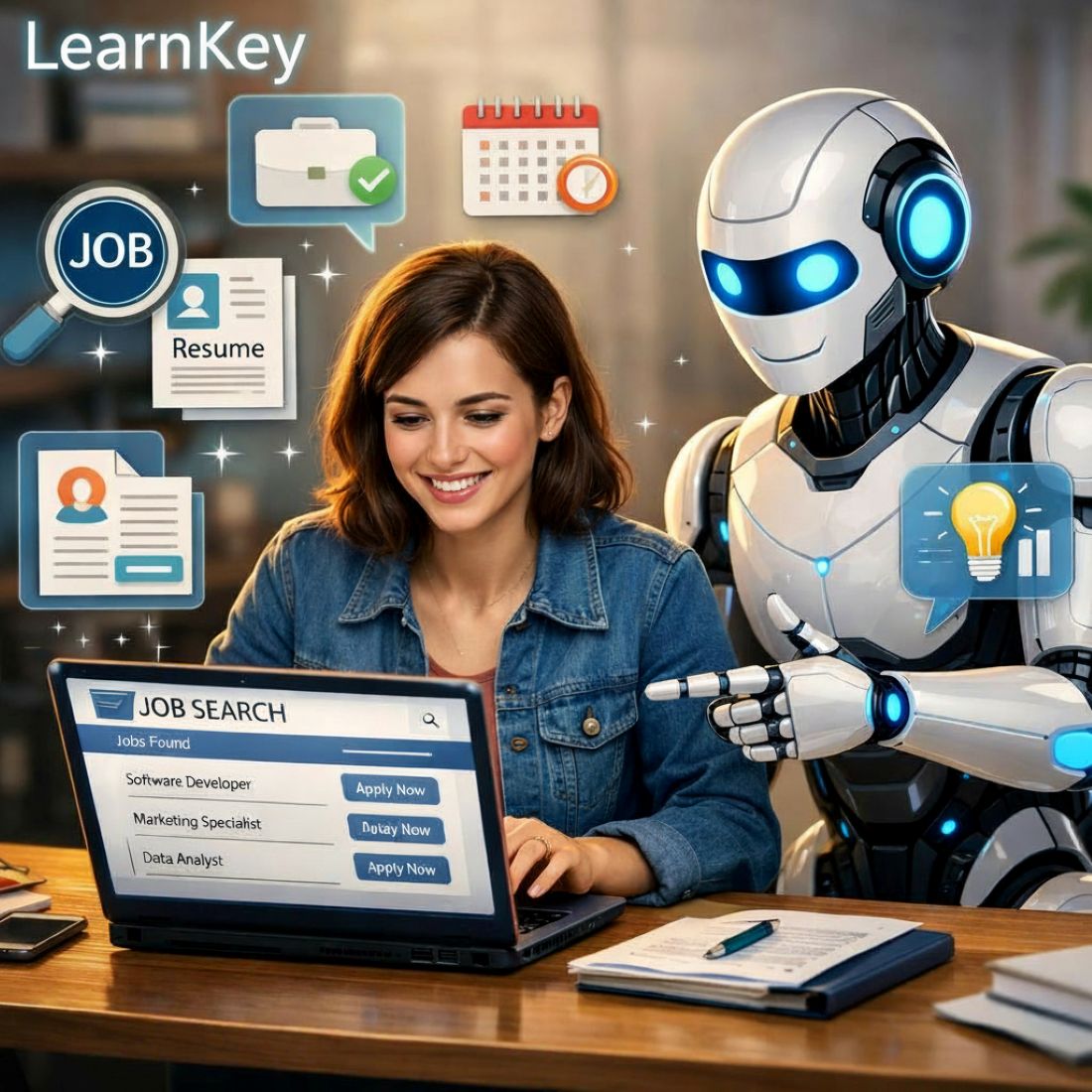
AI Employability Resource Coming Soon | EmployabilityHub.AI
EmployabilityHub.AI is coming soon. It will be the first of its kind—a fully integrated AI-powered tool for career discovery, resume optimization, and interview readiness, all within the OnlineExpert LMS. This resource marks a breakthrough, pairing LearnKey’s employability approach with artificial intelligence to offer students a smarter, more intuitive way to plan their careers. As highlighted in a recent NACE article on AI-powered career and life design, artificial intelligence is rapidly becoming a transformative tool for helping students explore identity, evaluate pathways, and create meaningful professional journeys. EmployabilityHub.AI builds on these trends.
Why AI Is Reshaping Career Exploration for Students?
- Reflect on their strengths and interests
- Discover opportunities they didn’t know existed
- Connect their skills to real careers and real qualifications
Introducing EmployabilityHub.AI: Smarter Tools. Stronger Skills. Better Jobs.
1. Strength-Based Career Finder (AI-Powered)
This tool will allow students to:
- Discover career paths aligned with their personality and training.
- See how their chosen LearnKey program connects to in-demand roles.
- View job titles and skill requirements curated specifically for them.
- Explore new possibilities based on strengths—not guesswork.
2. AI Resume Editor & LinkedIn Optimization Tool
- Write, rewrite, or refine resumes using clean, modern formatting.
- Optimize wording for applicant tracking systems.
- Highlight strengths, certifications, and job-aligned skills.
- Assist with LinkedIn profile summaries, headlines, and skills lists.
3. Mock Interview Pro – AI Interview Simulation
- Behavioral, situational, and technical interview practice
- Real-time coaching and suggestions
- Tailored interview questions based on target job roles
- Feedback on clarity, structure, tone, and confidence
Enhancing Student Success Through AI + Human Support
Why EmployabilityHub.AI Is a First-of-Its-Kind Resource
EmployabilityHub.AI stands out because it:
- Integrates directly with LearnKey’s training pathways and certifications
- Combines career discovery with real-world job preparation
- Uses AI to personalize each student’s experience
- Reinforces soft skills and professional behavior development
- Prepares students to use AI responsibly—an essential workplace skill.
- Creates faster clarity and more confidence for new job seekers
How AI Improves Student Agency and Confidence
- Explore multiple professional identities.
- Receive high-quality feedback without waiting.
- Practice interviews whenever they want.
- Build resumes that feel polished and professional.
- Understand the job market more clearly.
- Take ownership of their career journey.
This sense of agency is a proven driver of better job outcomes.
Employers increasingly expect new hires to be comfortable using AI for:
- Problem-solving
- Communication
- Research
- Productivity
- Resume tailoring
- Project analysis
Intuit QuickBooks Online
LearnKey is excited to announce the release of its newest course, Intuit QuickBooks Online Version 4. This course will equip learners with the latest skills and knowledge to master QuickBooks Online Version 4, the premier cloud-based accounting software for small and mid-sized businesses. With Intuit QuickBooks Online being a leader in financial management software, this course is a must for anyone looking to enhance their bookkeeping and financial skills, whether new to the platform or looking to upgrade their current skills with the latest version.
Course Overview: Intuit QuickBooks Online Version 4 by LearnKey
LearnKey’s Intuit QuickBooks Online Version 4 course includes various tools and resources to reinforce learning. Each student receives a workbook (PDF) containing additional projects, activities, glossary key terms, and definitions to help solidify the skills learned during the course.
The course spans 3 hours and is designed to be concise yet thorough, offering students a streamlined, manageable educational experience for busy professionals.
Class Hours: 3
Includes: Student workbook (PDF) with additional projects, activities, glossary key terms, and definitions to help reinforce learning.
For more information, you can check out additional details about the course at Intuit QuickBooks Online 4.0 Course Outline.
Comprehensive Coverage of Key Features
The LearnKey Intuit QuickBooks Online Version 4 course offers a deep dive into the latest features and functionalities of the software. Learners will explore everything from basic bookkeeping tasks to advanced financial management techniques. The course covers essential topics such as income and expense tracking, automated invoicing, and managing taxes, ensuring users can maximize the software’s capabilities.
Hands-on Training and Real-World Scenarios
At LearnKey, we believe in practical, hands-on learning. The course includes interactive labs and real-world scenarios that allow students to apply what they’ve learned in a simulated business environment. This experiential learning approach helps learners gain the confidence to use QuickBooks Online in natural business settings, making the transition from classroom to real-world application seamless.
Expert-Led Instruction
The course is led by industry experts who bring years of experience in accounting and financial management. Their in-depth knowledge of QuickBooks Online ensures that students receive high-quality, professional guidance throughout the learning process. The instructors also provide insights into common challenges businesses face using QuickBooks and offer solutions to optimize the platform for business success.
Career Opportunities with Intuit QuickBooks Online Knowledge
By mastering Intuit QuickBooks Online, students open up opportunities in various roles such as bookkeeper, accountant, finance manager, and business consultant. The ability to manage cloud-based accounting platforms like QuickBooks is in high demand across industries, making this course a valuable asset for anyone pursuing a career in finance or business management.
With Intuit QuickBooks Online Version 4 training, you’ll be prepared to:
- Manage small business finances.
- Support financial reporting and bookkeeping tasks.
- Oversee automated transactions for efficiency and accuracy.
- Provide consultation services for QuickBooks Online users.
- Whether starting your career or advancing in the field, LearnKey’s course ensures you have the skills necessary to succeed in today’s digital finance landscape.
What’s New in Intuit QuickBooks Online Version 4?
Refreshed User Interface
One of the critical updates in Version 4 is the enhanced user interface, which simplifies navigation and makes it easier for users to access necessary financial data. In the LearnKey course, learners will get a step-by-step walkthrough of the new interface, making them quickly comfortable with the platform’s layout and features.
Automation and Time-Saving Features
Version 4 introduces more robust automation tools, such as automatic transaction categorization, recurring invoicing, and real-time financial tracking. The course will guide users through setting up these features to save time and reduce manual data entry, which can significantly improve businesses’ efficiency.
Expanded Integration Capabilities
QuickBooks Online Version 4 also enhances integration with third-party applications, making connecting QuickBooks to payroll systems, CRM tools, and eCommerce platforms easier for businesses. The LearnKey course teaches learners how to seamlessly integrate QuickBooks with these external systems to streamline operations and maintain accurate financial data.
Benefits of Enrolling in the Intuit QuickBooks Online Version 4 Course
Master the Latest Features
By enrolling in LearnKey’s course, learners will be among the first to gain comprehensive knowledge of the latest updates in QuickBooks Online Version 4. Whether you’re managing a small business or handling accounting for clients, mastering these features will provide a competitive edge in the marketplace.
Interactive Learning Experience
LearnKey’s courses are designed to offer a dynamic and interactive learning experience. Learners can retain information more effectively with video lessons, quizzes, and hands-on labs. The course structure allows for self-paced learning, ensuring flexibility for busy professionals and students.
Certification and Career Advancement
Upon completion of the Intuit QuickBooks Online Version 4 course, learners will receive a certification validating their software expertise. This certification can enhance career prospects by demonstrating proficiency in one of the most widely used accounting tools. For business owners, mastering QuickBooks Online can streamline financial management and position their business for growth.
LearnKey’s Job Placement Support for QuickBooks Learners
LearnKey is committed to supporting its students beyond the classroom. Our Job Placement Support program connects graduates with job opportunities in accounting, bookkeeping, and finance. Through partnerships with industry leaders and companies seeking certified QuickBooks professionals, we help learners transition smoothly into their desired career paths.
Students can also use our career guidance services, including resume building, interview preparation, and job search assistance. With the growing demand for QuickBooks expertise, LearnKey’s job placement support is valuable for those looking to capitalize on their new skills.
Why QuickBooks Online Version 4 Matters for Your Business
As cloud-based accounting continues to grow, Intuit QuickBooks Online Version 4 offers businesses a flexible, robust financial management tool. Whether you’re a freelancer, small business owner, or accountant, tracking income, managing expenses, and generating financial reports are essential for success in today’s fast-paced business environment.
LearnKey’s QuickBooks Online Version 4 course is tailored to ensure you can leverage all these features to improve your business’s financial efficiency. With expert guidance and practical training, you’ll be prepared to navigate the evolving financial landscape confidently.
Enroll in LearnKey’s Intuit QuickBooks Online Version 4 Course Today
Don’t miss the opportunity to master QuickBooks Online Version 4 with LearnKey’s comprehensive, expert-led course. Whether you’re looking to enhance your career prospects, streamline your business’s financial processes, or better understand accounting software, this course offers everything you need.
With flexible, self-paced learning options and dedicated support, LearnKey makes it easier than ever to achieve your goals. Start your journey toward financial expertise and career success by enrolling in LearnKey’s Intuit QuickBooks Online Version 4 course today.
LearnKey Cybersecurity Webinar September 2024: Protect Your Data and Devices

Save the date for one of the most crucial webinars of the year! On September 18, 2024, at 1 PM AZ / 2 PM MST, LearnKey will host a special cybersecurity webinar that promises to provide valuable insights and practical steps to safeguard your digital and physical spaces. Whether you’re an individual looking to protect your data or a team leader, this LearnKey cybersecurity Webinar September 2024 will offer essential knowledge to strengthen your cybersecurity posture.
In today’s digital landscape, cybersecurity threats are more sophisticated than ever. From phishing emails to device vulnerabilities, the risks are growing, and so is the need for education on protecting sensitive information. You don’t have to be an IT expert to take control! This LearnKey cybersecurity Webinar in September 2024 is designed to help everyone—whether tech-savvy or not—develop the confidence and skills to safeguard personal and organizational data from cyber-attacks.
Meet the Experts: Jason Manibog and Natasha Nelson
This LearnKey cybersecurity Webinar in September 2024 will be hosted by two experts with over 25 years of experience in the IT industry and nearly 100 industry certifications between them. Jason Manibog and Natasha Nelson bring a wealth of knowledge, ensuring that participants leave the webinar with actionable insights and strategies to protect their systems and information.
With their combined experience, Jason and Natasha will guide you through crucial cybersecurity topics, breaking them into easy-to-understand concepts. Their goal is to empower attendees with the knowledge to improve their cybersecurity practices, regardless of their technical expertise.
Key Topics Covered in the LearnKey Cybersecurity Webinar September 2024
Cybersecurity can seem overwhelming, but this LearnKey cybersecurity Webinar in September 2024 will make it accessible and straightforward. Here’s a sneak peek at the essential topics that will be covered:
- Protecting Email: Learn how to recognize phishing attacks and secure your inbox from potential threats.
- Securing Information: Discover best practices for safeguarding sensitive data, whether personal or professional.
- Safeguarding Devices: Explore how to protect your devices—phones, laptops, and tablets—from cyber intrusions.
- Ensuring Physical Security: Understand the importance of securing your physical locations to prevent unauthorized access.
- Safe Remote Working: With remote work becoming more common, learn how to maintain security practices while working from home or on the go.
Attending the LearnKey cybersecurity Webinar in September 2024 will give you practical advice to implement immediately to secure your digital environment. Whether protecting your data or ensuring your entire business, this webinar will equip you with the necessary tools to succeed in today’s cybersecurity landscape.
Why Attend the LearnKey Cybersecurity Webinar in September 2024?
This LearnKey cybersecurity Webinar in September 2024 is not just another cybersecurity lecture—it’s an interactive and informative session tailored to provide real-world solutions. Cyberthreat are evolving, and staying informed about the latest techniques and practices to defend against attacks is crucial. This webinar will give you expert insights and proven strategies to keep your data and devices secure.
Moreover, this webinar is accessible to everyone. Even if you don’t consider yourself an IT expert, this LearnKey cybersecurity Webinar in September 2024 will provide you with the fundamental knowledge needed to take control of your cybersecurity. Our hosts will break down complex topics into digestible pieces, ensuring that everyone can understand better how to protect their systems.
How to Register for the LearnKey Cybersecurity Webinar September 2024
Are you ready to enhance your cybersecurity skills? Don’t miss out on this opportunity to learn from industry experts! Register for the LearnKey cybersecurity Webinar in September 2024 today and take the first step toward securing your computing environment from cyber-attacks.
Attending gives you invaluable insights into cybersecurity practices, enabling you to protect your email, devices, data, and even your physical environment. Whether you’re concerned about safe remote working or want to ensure your business is secure from potential threats, this webinar is the perfect place to start.
Call to Action: Register now for the LearnKey cybersecurity Webinar in September 2024 and gain the confidence and knowledge to secure your computing environment. With expert hosts Jason Manibog and Natasha Nelson, you’ll leave the session equipped with strategies to protect your data, devices, and workspaces from cyberthreat.
2020-21 Career Pathways Update
Hello, everyone. At the beginning of each year we set internal goals and one of my goals is to set the course order and career pathways we will pursue the coming year. Inevitably, demands and priorities change, and so do exam objectives for courses we plan on filming seemingly right before filming, but I digress.
One adjustment we have had to make is to update career tracks to reflect the ever-evolving Microsoft certification transitions from fundamental certifications to role-based certifications. The theory behind this is that certifications are more valuable when tied to a certain job role rather than just a cursory knowledge of a system. Personally, I think it is a great idea as this allows for those pursuing certifications to better target the areas of expertise they want.
That said, one of the main reasons for this career pathways adjustment, besides the fact that cloud computing is growing rapidly, is that as of January 31, 2021, all fundamental exams are being retired. This includes all exams starting with 70- and all MB- exams (for Microsoft Dynamics) as well.
With that said, allow me to present to you the highlights of all the career pathway changes:
NEW: Cloud Administrator
- Exams: Azure Fundamentals (AZ-900), Azure Administrator (AZ-104), and Azure Security Engineer (AZ-500)
- This is replacing Windows Server 2012 MCSA (exams 70-410, 70-411, and 70-412)
- Reason: Microsoft is pushing Azure, its cloud infrastructure, heavily and the adoption rate is picking up speed
UPDATED: Programming
- Exams: Oracle Java Associate (1ZO-808), Flutter Certified Application Developer (AFD-200), and Azure Solutions Developer (AZ-204)
- These are replacing the soon-to-be-retired Microsoft programming exams (70-480, 70-483, and 70-486)
- This is a much “wider” track in that we have one general certification (Java), one for mobile app development (Flutter), and one for cloud (Azure)
NEW: Artificial Intelligence
- Exams: Azure Fundamentals (AZ-900), Azure AI Fundamentals (AI-900), and Designing and Implementing an Azure AI Solution (AI-100)
- According to LinkedIn, 133 million jobs will touch AI-enabled automation by 2022
NEW: Database Professional
- Exams: Azure Fundamentals (AZ-900), Azure Data Fundamentals (DP-900), and Designing and Implementing a Data Science Solution on Azure (DP-100)
- This is an excellent track for someone looking to become a data analyst
NEW: Advanced Database Professional
- Exams: Implementing an Azure Data Solution (DP-200), Designing an Azure Data Solution (DP-201), and Administering Relational Databases on Microsoft Azure (DP-300)
- This basically replaces the MCSA for SQL Server
The timeframe for these tracks is from now to about 12 months from now for all of these and, per usual in the IT business, these are subject to change. But this should give you an idea as to how we are evolving our offerings to match with the best possible employability scenarios for you as you pursue your journey.
How Important is Business Communication? Important Enough For a New Certification
About two months ago, I was having a conversation with our CEO and he said, “Brother (he calls me brother, how nice), wouldn’t it be nice if we could do a soft skills (meaning non-tech) course that could help improve communication skills for business? Is there a cert on that?”
At the time, the answer was yes, I could come up with a course but no, there was no official certification for this. But wouldn’t you know it: two weeks later, Certiport announced a new Communication Skills for Business (CSB) certification that will be out later this fall. Great minds think alike.
We, as you well know, are dedicated to improving employability every day. But that doesn’t just mean tech skills and being able to do a COUNTIFS function in Excel. Far from it. Strong employability requires strong communication skills, and this is where this course fits in to the overall employability umbrella.
Every so often we decide to change things up and bring in a guest author to do a course. For this course, we are very excited to have Jennifer Stubblefield, the reigning Certiport Educator of the Year, bring you this course. Jennifer has been a business teacher for over 25 years and is a champion Microsoft Office Master instructor as well. She understands both the tech side and the communication side of employment and it shows in this course.
We filmed the course last week and we are very excited to bring you this course. This course is like no other in that though the exam is heavily topic-based, our course is scenario-based and interactive while teaching to the core exam topics of
:
- Describe Basic Communication Principles
- Plan for Effective Communication
- Apply Best Practices for Creating Business Deliverables
- Deliver Your Message
- Receive Communications
- Analyze Communication Scenarios
This course applies to both those looking for jobs and those already in a career. I was going to say this course applies to those looking to improve communication skills, but let’s be real: everyone could use improvement in this area. And Jennifer covers this literally from head to toe (as in wardrobe for an interview – I knew a tie is supposed to come down to a belt buckle, but did you?). She also points out that whoever runs the front desk at a company is watching interview candidates from the moment they walk in and will divulge what is seen to the hiring decision-makers. A good reminder for all of us.
The truth is, we as a filming crew learned a lot even though improving our communication skills wasn’t on our minds when Jennifer arrived to film this course. For example, did you know there is a big difference in meaning between having a meeting in a L-shaped seating arrangement vs. sitting across from someone? I didn’t. Now, I do. I learned a lot about improving business communication skills just in the three days it took us to film this course. And I talk for a living. So, if I can learn a lot, so can you, no matter where you are on your career path


Let’s go CADDing – New Course, New Series
Hello and happy spring from your humble senior instructor. I am very happy to announce that we have released the first course in our new series of courses on Computer Aided Drafting and Design (CADD). The course? Autodesk Certified User for AutoCAD. For those of you who are wondering what exactly is AutoCAD, let me tell you: it is computer-aided design (CAD) software that architects, engineers, and construction professionals rely on to create precise 2D and 3D drawings (that’s the description from the official website, so let’s go with that). The course itself, which covers the material on the AutoCAD Certified User exam, takes one through building some lamp drawings for the inside of a house.
In fact, “house” is the major theme of this entire series. Our second course in the series, Autodesk Revit, centers around building a house. The major use of Revit is designing buildings, hence the house design. The third course in our series, Autodesk Inventor, focuses on mechanical drawings. Thus, in that course, you will see how mechanical parts of a house are built.
CADD as a whole is a growing need, with a 7% growth expected for demand in the job market in the next decade, according to the Department of Bureau and Labor Statistics. This series of courses will help increase your employability prospects for many areas of CADD. And, for the AutoCAD and Revit courses, we have brought in an expert: Gary Roberts, who has over 20 years’ experience teaching Autodesk and similar applications at the high school level. In fact, through his teaching, I can say with confidence that I can now draw the architecture piece for something besides a golf course. Just don’t ask me to draw a raindrop as I’ve been told that’s not my best drawing skill (get the Animate CC 2015 course and you can decide for yourself).
Microsoft Office 2019, Here We Come…
A belated Happy New Year to you all. January is over, so I can say that. As I sit here writing this wondering when winter will ever end, I am happy to let you all know that we are in the midst of building and producing our Office 2019 suite of courses. As we are always trying to improve our product and your employability prospects, here is what you can expect to see as these courses start to roll out this spring:
Word 2019 – building a resume, cover letter, schedule, and small brochure.
Excel 2019 – building a small budget, a schedule list, and multiple summaries of data.
PowerPoint 2019 – building recruiting presentations for a small business and a school club.
Outlook 2019 – the whole personal information management package, from email, to calendar, to contacts, to tasks, to notes, and how all are used for continuity in the business world.
Access 2019 – a database to manage a small business.
Oh, small business, yes, I almost forgot: all of these courses are going to revolve around scenario-based learning (here are part I and part II of the scenario-based learning blogs for your reading pleasure) as we cover most of the material through two avenues: day-to-day usage at a fictitious athletic club business, and practical scenarios for students and those looking for a new career, as outlined in some of the scenarios above. We are not only about helping you pass the Office 2019 MOS exams (yes, these courses will help you do so), but we are also about making learning fun, fast-paced, enjoyable, scenario-based, and, most importantly, there to improve your employability.
And, these courses are loaded with practical tips, brought to you by our new “face of LearnKey,” Marie, who is helping us bring you a rich, practical, and full learning experience not only for Office 2019, but for more of our future courses. We look forward to start bringing you this series later this spring. Until then, here’s to spring getting here. Now. At least pitchers and catchers start reporting this week. Hope springs eternal!
MTA Cloud Fundamentals (98-369) Course Released!
Today, we are excited to announce the release of our MTA Cloud Fundamentals (98-369) course.
MTA Cloud Fundamentals (98-369)
The MTA Cloud Fundamentals (98-369) course is a perfect starting point for those who want to learn about cloud computing, a computing method that is ever-increasing in popularity and is a career field in great need. This course helps with employability prospects in the fields of general cloud computing and support for Office 365 and Intune. The course will also prepare students for the 98-369 exam. Topics in this course include: understanding the cloud, enabling Microsoft cloud services, administering Office 365 and Intune, using and configuring cloud services, and supporting cloud users.
Our hope is that through our courseware we may provide learners with the guidance, preparation, and skills they need to succeed. For more information and to learn about additional LearnKey products visit our website.