
Tag: Certification
Entry-Level NHA Healthcare Certifications, Train Online Now

2026 Trend Entry-Level NHA Healthcare Certifications:
A smart and affordable way to enter a growing Industry
-
- An adult who wants to reskill into a stable industry, without starting over in a four-year degree track, or
- A high school graduate who wants a real career path in healthcare without a traditional college.
-
- “Should I consider the healthcare industry?”
- “Can I do it affordably?”
- “Can I do it online?”
Why healthcare is such a strong “Plan A” for adults and non-college students
-
- Patient scheduling and intake
- Front-desk workflows and communication
- Medical documentation and records systems
- Billing, coding, and claims processes
What an entry-level certification really does for your career
-
- You learned the vocabulary and workflows of the job
- You can follow standards and processes
- You took the initiative to train, prepare, and prove competence
- You’re serious about entering the field, not just “trying it out.”
1) CBCS, Certified Billing and Coding Specialist
-
- Medical billing workflow basics
- Coding foundations used to support claims and reimbursement processes
- Documentation and accuracy habits that protect the revenue cycle
2) CEHRS, Certified Electronic Health Records Specialist
3) CMAA, Certified Medical Administrative Assistant
-
- Scheduling and communication
- Patient intake workflows
- Administrative coordination inside a care environment
-
- Prefer details, accuracy, and behind-the-scenes work? Start with CBCS.
- Prefer systems, digital records, and structured data? Start with CEHRS.
- Prefer people, communication, and daily office rhythm? Start with CMAA.
Real Student success: As recently as last year, one student going through LearnKey’s Allied Health Services program was doing medical coding work at an optometrist’s office when she started the CBCS program. She took advantage of our tutors, made a goal to get hired by a larger employer, which she achieved in only eight (8) months. Our onboarding process ensures we spend time really educating students on what it will take to complete the program. The plan below is easy to follow:
-
- Pick your entry target: CMAA, CEHRS, or CBCS (start with the role you can picture yourself doing).
- Set a weekly time block (even 5–7 hours/week is meaningful if consistent).
- Build a “why” reminder (a vision board, a note on your mirror, phone wallpaper—anything that keeps your motivation visible).
- Train with structure (don’t rely on random videos or scattered resources).
- Practice like you’ll perform (timed quizzes, scenario thinking, real workflow review).
- Prepare your employability assets early (resume + interview stories don’t wait until the end).
- Apply with a certification narrative: “Here’s what I trained on, here’s what I can do, here’s how I’ll contribute.”
If you want additional perspective on building durable career options through skills and certifications, this LearnKey blog pairs well with your healthcare plan:
Generative AI Skills & Soft Skills | LearnKey 2026 Edge

Competitive Edge in 2026: Learning Generative AI, Developing Soft Skills, and now more than ever, learn how to Learn Online.
In today’s world, Industry certifications show employers you have real, validated skills—not just experience. When paired with career-ready skills like communication, adaptability, AI, and accountability, they help you stand out, stay competitive, and step into opportunities with confidence.
The future belongs to people with excellent soft skills and strong practical AI knowledge. That is why LearnKey invested in our LIFT UP Professional Development Series, which is perfect for online learning and complements certification-based training. Two parts focus on Leading Myself and Leading Others. Ideal for both developing leaders and experts/SMEs.
Here is the reality sixty-six (66) percent of hiring leaders said they would not hire someone without generative AI skills. And, entry-level jobs aren’t disappearing. People still need a way into the workforce. If you learn these skills, then thanks to AI, you can enter with high-level technical capabilities and low-level soft skills, unless you intentionally develop them.
That is why you just need to shift your focus. That means building the skills that will differentiate you: clear communication, taking initiative, Team collaboration, a Strong work ethic, critical thinking, and some level of experience in basic project management.
Why Soft Skills Drive Career Advancement
Soft skills are not “nice-to-have” traits. They are performance multipliers.Research from Harvard and the Carnegie Foundation suggests that up to 85% of career success can be attributed to interpersonal and professional skills, while only 15% is linked directly to technical knowledge.
The Most Overlooked Skill: Learning How to Learn Online
- Industry certifications
- Corporate training
- Career transitions
- Workforce reskilling
- Continuing education
- Setting structured study schedules
- Blocking distractions
- Practicing active recall
- Reviewing strategically
- Managing digital tools efficiently
- Holding yourself accountable
Learning Agility Is the New Job Security
- Quickly acquiring new skills
- Applying feedback effectively
- Embracing new technologies
- Remaining curious
- Staying comfortable with change
LearnKey’s New Interactive Glossary Elevates Active Learning and Student Outcomes
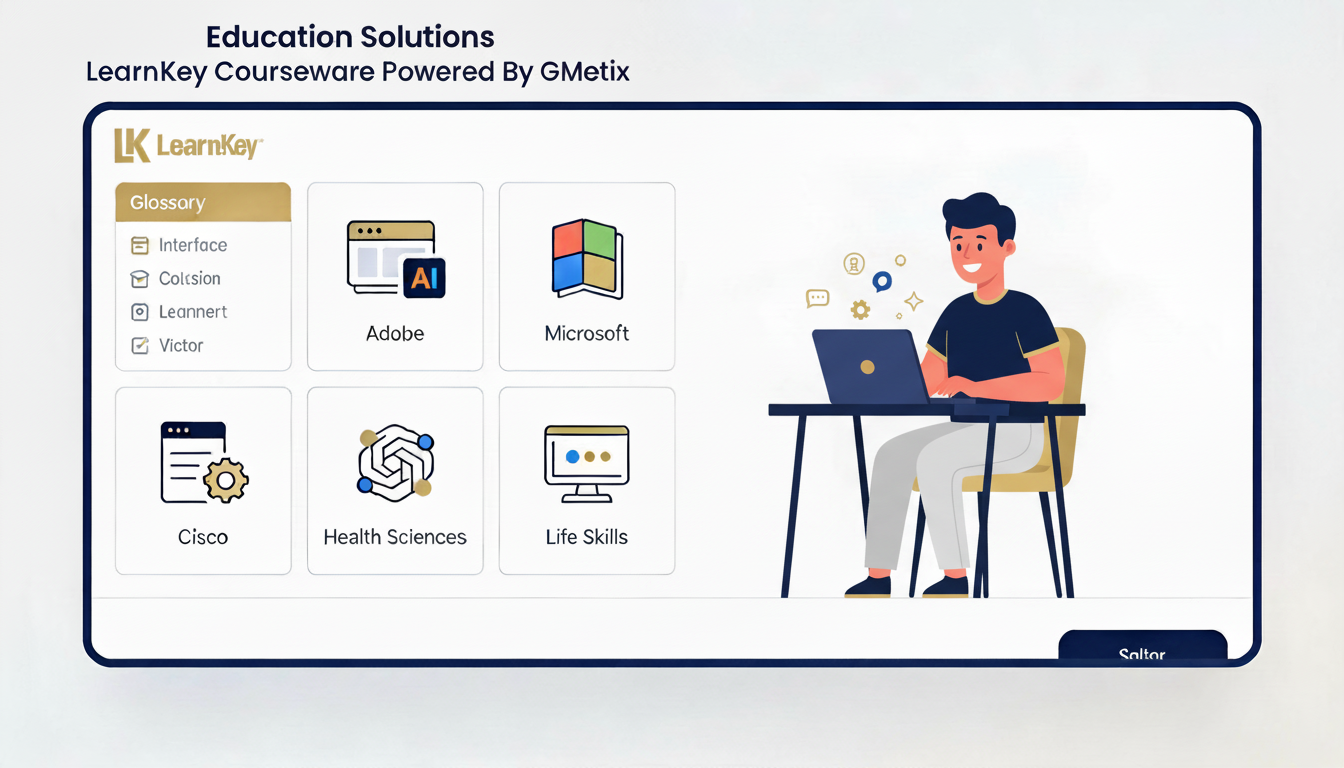
Digital education continues to evolve rapidly, but one truth has become increasingly clear: interactive online learning produces stronger student outcomes than passive consumption of content. As learners demand more engaging, efficient, and practical educational experiences, organizations that embed active learning tools into their course ecosystems gain a measurable advantage. This is exactly where LearnKey is raising the bar with the launch of its new Interactive Glossary.
Why Active Learning Matters More Than Ever
The Challenge of Technical Language in Online Learning
- Cognitive flow is broken.
- Context is lost
- Frustration increases
- Engagement drops
What Makes LearnKey’s Interactive Glossary Different
- Clear, learner-friendly definitions
- Industry-aligned terminology
- Certification-relevant language
- Consistent instructional tone across courses
Active Learning in Action: Vocabulary as a Learning Accelerator
- Reinforcing terminology at the point of need
- Supporting contextual understanding
- Reducing cognitive load
- Encouraging repeated exposure through use
The Measurable Impact on Student Outcomes
- Higher course completion rates
- Improved confidence in navigating complex topics
- Stronger assessment performance
- Better exam readiness
Strengthening Exam Readiness on the GMetrix Platform
- Aligning vocabulary with exam objectives
- Clarifying technical terms used in practice tests
- Reducing exam anxiety caused by unfamiliar language
- Improving comprehension during scenario-based questions
Value Creation for Students
- Faster understanding of complex concepts
- Reduced frustration and cognitive overload
- Increased engagement with the course material
- Higher likelihood of exam success
Strategic Value for LearnKey
- Demonstrating commitment to evidence-based learning design
- Improving learner satisfaction and outcomes
- Supporting partner platforms like GMetrix
- Strengthening LearnKey’s reputation for high-quality content
Aligning with the Future of Online Learning
When paired with research-backed active learning strategies and delivered through robust platforms like GMetrix, the glossary becomes a clear example of how thoughtful design translates into measurable impact.
Conclusion: A Simple Feature with a Big Impact
EmployabilityHub.AI: The First-of-Its-Kind AI-Enabled Employability Resource Transforming Career Exploration
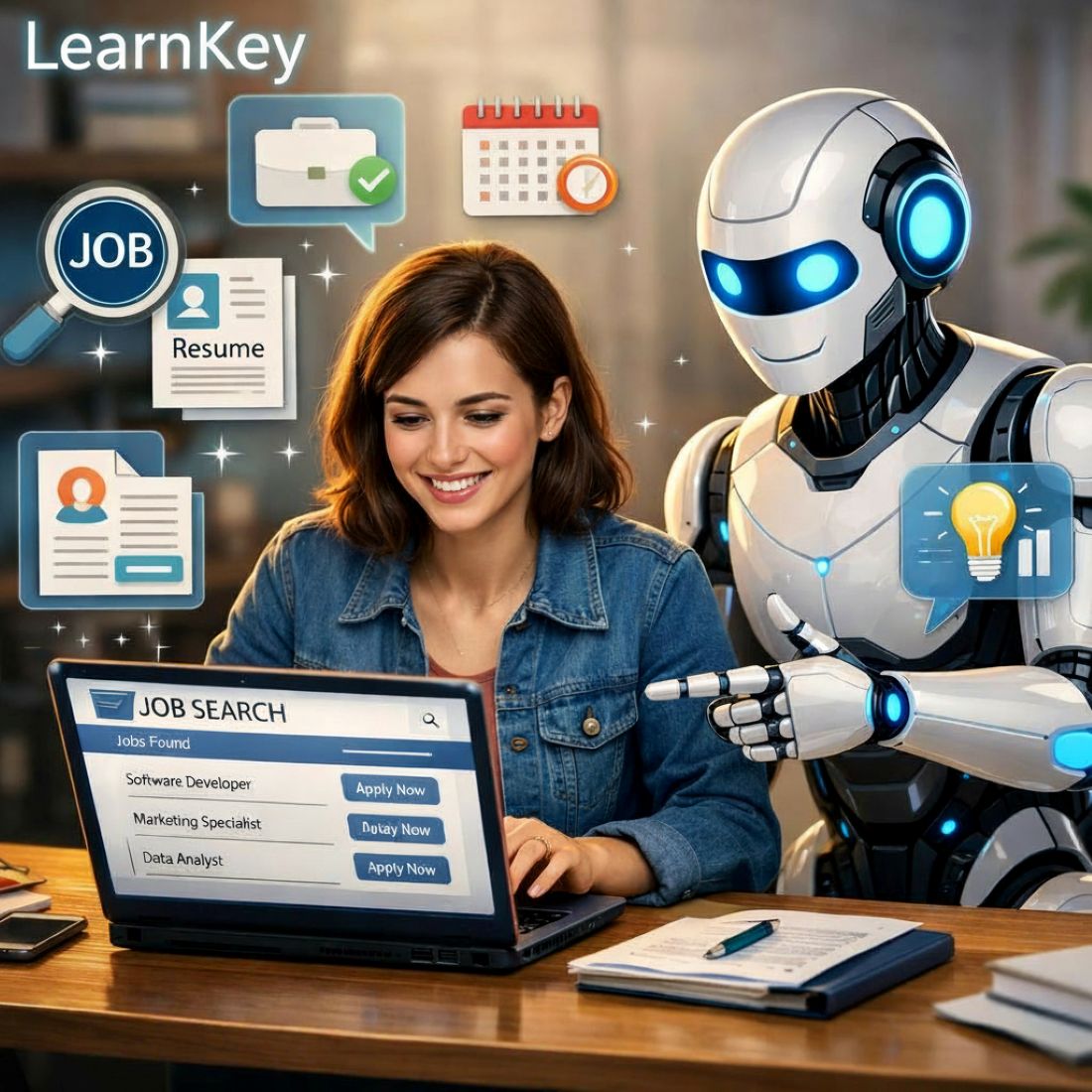
AI Employability Resource Coming Soon | EmployabilityHub.AI
EmployabilityHub.AI is coming soon. It will be the first of its kind—a fully integrated AI-powered tool for career discovery, resume optimization, and interview readiness, all within the OnlineExpert LMS. This resource marks a breakthrough, pairing LearnKey’s employability approach with artificial intelligence to offer students a smarter, more intuitive way to plan their careers. As highlighted in a recent NACE article on AI-powered career and life design, artificial intelligence is rapidly becoming a transformative tool for helping students explore identity, evaluate pathways, and create meaningful professional journeys. EmployabilityHub.AI builds on these trends.
Why AI Is Reshaping Career Exploration for Students?
- Reflect on their strengths and interests
- Discover opportunities they didn’t know existed
- Connect their skills to real careers and real qualifications
Introducing EmployabilityHub.AI: Smarter Tools. Stronger Skills. Better Jobs.
1. Strength-Based Career Finder (AI-Powered)
This tool will allow students to:
- Discover career paths aligned with their personality and training.
- See how their chosen LearnKey program connects to in-demand roles.
- View job titles and skill requirements curated specifically for them.
- Explore new possibilities based on strengths—not guesswork.
2. AI Resume Editor & LinkedIn Optimization Tool
- Write, rewrite, or refine resumes using clean, modern formatting.
- Optimize wording for applicant tracking systems.
- Highlight strengths, certifications, and job-aligned skills.
- Assist with LinkedIn profile summaries, headlines, and skills lists.
3. Mock Interview Pro – AI Interview Simulation
- Behavioral, situational, and technical interview practice
- Real-time coaching and suggestions
- Tailored interview questions based on target job roles
- Feedback on clarity, structure, tone, and confidence
Enhancing Student Success Through AI + Human Support
Why EmployabilityHub.AI Is a First-of-Its-Kind Resource
EmployabilityHub.AI stands out because it:
- Integrates directly with LearnKey’s training pathways and certifications
- Combines career discovery with real-world job preparation
- Uses AI to personalize each student’s experience
- Reinforces soft skills and professional behavior development
- Prepares students to use AI responsibly—an essential workplace skill.
- Creates faster clarity and more confidence for new job seekers
How AI Improves Student Agency and Confidence
- Explore multiple professional identities.
- Receive high-quality feedback without waiting.
- Practice interviews whenever they want.
- Build resumes that feel polished and professional.
- Understand the job market more clearly.
- Take ownership of their career journey.
This sense of agency is a proven driver of better job outcomes.
Employers increasingly expect new hires to be comfortable using AI for:
- Problem-solving
- Communication
- Research
- Productivity
- Resume tailoring
- Project analysis
Value of Industry Certifications | LearnKey Training Programs

2026 Spotlight: The Value of Industry Certifications in Today’s Skills-Based Economy
In today’s fast-changing workforce, the value of industry certifications has never been more critical. As technology evolves faster than traditional education can keep pace, employers are increasingly relying on certification programs to validate fundamental skills and identify job-ready candidates. For learners, especially high school graduates, young adults, and career changers, industry certifications offer a direct and trusted path into high-demand careers. This trend is expected to continue in 2026, as the value of skills-based certifications is on the rise.
At LearnKey, our mission is to deliver world-class training that helps people achieve industry-recognized certifications and the opportunities that come with them. In 2025, our blog content primarily focused on preparing learners for certification-based roles in over twenty different certification pathways. This emphasis reflects a powerful trend shaping the global workforce: certifications are becoming essential currency in the job market.
This article explores why industry certifications matter, how they help close the skills gap, and how LearnKey’s long-standing partnership with Certiport empowers young adults to gain the certifications they need to succeed.
Industry Certifications Are Now a Core Part of Career Success
The rise of skills-based hiring is reshaping the employment landscape. Companies are placing less weight on traditional degrees and more weight on verified competencies, especially in technology-driven roles. Industry certifications provide a reliable means for employers to verify that an applicant has acquired the necessary skills for a particular position.
This shift became a significant theme in LearnKey’s 2025 blog posts. Whether we were discussing IT support roles, cybersecurity pathways, QuickBooks Online Version 4, Adobe design skills, or our broader Upskill Academy programs, the message was consistent: certifications are becoming the foundation of modern career development.
Industry certifications offer several significant advantages:
1. Certifications Prove Real Skills
Unlike degrees, which can vary widely in curriculum and instruction, certifications are standardized. A Microsoft Office Specialist certification means the same thing whether earned in Utah, India, Brazil, or the UK. Employers trust these credentials because they are measurable, repeatable, and verified through an examination.
2. Certifications Shorten the Path to Employability
Many young adults lack the time or financial resources to pursue multi-year education programs. Certifications provide a faster route—weeks or months, rather than years—to job readiness.
3. Certifications Boost Earning Potential
Across fields such as IT, accounting, cybersecurity, and design, certified workers often earn significantly more than their non-certified peers. In 2025, LearnKey highlighted multiple student success stories and new pathway updates showing how certifications led to promotions, salary increases, and career transitions.
4. Certifications Build Confidence
For many learners, especially those entering the workforce for the first time, earning a certification creates a sense of accomplishment and momentum. It signals that they belong in professional environments and are capable of achieving more.
The Youth Skills Gap Makes Certifications Essential
To understand the growing urgency behind certifications, it is essential to examine the broader labor landscape. Pearson VUE, parent company of Certiport, recently published a powerful article titled “Empowering Young People to Bridge the Skills Gap.”
The article highlights a global truth:
Young people no longer feel adequately prepared for the workforce, and employers are increasingly uncertain about their ability to hire effectively.
Several factors drive this widening gap:
- Technology is advancing at a pace that schools can’t always keep up with.
- Employers want hands-on skills, not just theoretical knowledge.
- Many students graduate without exposure to real-world tools and workflows.
- Economic pressures demand faster, more flexible ways to gain skills.
Industry certifications are emerging as one of the most effective solutions.
Why Certifications Close the Skills Gap
Pearson VUE’s research indicates that young adults are increasingly seeking training that directly connects to job opportunities. Certifications support that by:
- Providing structured skill development
- Offering automated feedback through practice tools (like GMetrix)
- Aligning with real workforce needs
- Building digital and technical readiness
- Giving learners globally recognized proof of what they can do
This aligns perfectly with LearnKey’s 2025 blog series on certification-focused pathways. Whether discussing IT Support Specialist roles, cybersecurity technician training, or QuickBooks proficiency, our message has remained consistent: certifications help learners bridge the gap between education and employment.
The LearnKey + Certiport Partnership: A Timeline of Impact
LearnKey’s commitment to helping students earn industry certifications goes back decades, but a key milestone occurred in 2016. That year, LearnKey announced its partnership with GMetrix and Certiport, a Pearson Vue-owned company known for its industry-leading performance-based testing tools. The announcement marked the beginning of a productive collaboration focused on helping students and workforce learners prepare and pass Certiport exams.
This partnership created significant advantages:
1. Integration of Practice Exams with Course Training
Learners using LearnKey courses gained access to GMetrix practice tests, which allowed them to prepare for the real certification exam in an environment that felt authentic and familiar.
2. Better Outcomes Through Realistic Readiness
Practice tests simulate actual exam conditions, helping students understand the timing, question formats, and skills-based tasks they will encounter during the actual exam.
3. Expansion of Certification Offerings
The partnership helped LearnKey expand into key Certiport credentials, including:
- Microsoft Office Specialist (MOS)
- QuickBooks Online
- Adobe Certified Professional
- IC3 Digital Literacy
- IT Specialist certifications
- Autodesk certifications
4. Scaled Access for Schools and Workforce Programs
Together, LearnKey and Certiport have empowered thousands of learners, especially young adults, to acquire digital, business, and technical skills, as well as certifications.
This partnership continues to evolve, remaining one of the strongest foundations of LearnKey’s impact on the global workforce.
Certifications in LearnKey’s 2025 Blog Themes
LearnKey’s 2025 blogs repeatedly emphasized the importance of certification-centered learning. Several themes emerged across the year:
1. Career Pathways Built Around Certifications
LearnKey published updated guidance on IT support pathways, cybersecurity career steps, and business administration training—all of which incorporate certifications at each milestone.
2. Digital Literacy and Software Proficiency
Our 2025 blog posts highlighted training for QuickBooks Online Version 4, Microsoft Office apps, and Adobe Illustrator. These certifications help learners compete for administrative, accounting, graphic design, and office roles.
3. Job Readiness Through Cert Prep
Blogs published in 2025 discussed the importance of mock exams, skill-building exercises, and aligning training with national standards—all essential for passing certification exams.
4. The Role of Practice Testing
We highlighted the role of performance-based practice tools (including GMetrix) as essential for student success, particularly in MOS, Adobe, and QuickBooks certification prep.
5. Empowering First-Time Job Seekers
Several articles explored topics like communication, professionalism, and adaptability—critical soft skills that complement technical certifications.
These blogs formed the foundation of LearnKey’s workforce development message in 2025: certifications empower learners, create opportunities, and lead to hiring success.
Hiring managers know certified employees require less training and onboard faster, making them highly desirable
As we look forward, the value of industry certifications is expected to continue accelerating for several reasons.
Technology Will Never Slow Down
AI, automation, cybersecurity, cloud computing, and software ecosystems are advancing rapidly. Certifications will remain key for verifying up-to-date skills.
Skills-Based Hiring Is Here to Stay
More companies are adopting hiring models that prioritize skill demonstrations over formal degrees. Certifications fit perfectly into this shift.
Certifications Are Becoming Global Standards
Certiport, CompTIA, Adobe, Microsoft, and other leaders have made certifications truly global. A credential earned in one country is recognized worldwide.
Learners Want Faster, Flexible Education Options
Certifications provide structure without forcing learners into multi-year programs. This flexibility attracts career changers, students, and working adults alike.
Employers Use Certifications to Reduce Hiring Risk
Hiring managers know certified employees require less training and onboard faster, making them highly desirable.
How LearnKey Supports Students Through Certification Success
LearnKey’s certification training programs are designed to help students succeed from start to finish.
We focus on:
1. Beginner-Friendly Lessons
Even complex concepts, such as networking, cybersecurity, or financial analysis, are broken down into simple modules.
2. Real Practice
With Interactive-based labs, hands-on activities, and GMetrix practice tests, students build fundamental skills.
3. Career Pathways
We provide students with recommended sequences of courses, strengthening their journey from first skill to their first job.
4. Employability Training
LearnKey’s workforce readiness resources help students prepare for interviews, create résumés, and develop soft skills.
5. Certification-Driven Course Design
Every course is aligned to an official exam blueprint, ensuring learners are prepared for exactly what they’ll see on test day.
Conclusion: Certifications Open Doors for Learners Everywhere
Industry certifications change lives. They help people launch new careers, earn higher wages, gain confidence, and stay relevant in an evolving workforce. LearnKey’s long-standing partnership with Certiport and GMetrix strengthens our ability to deliver top-quality certification preparation to learners worldwide. As reflected in our 2025 blogs and Pearson VUE’s research, certifications are essential tools for closing the skills gap and empowering young adults to succeed.
Whether someone is entering the workforce for the first time or preparing for a career change, certifications offer a clear, proven, and globally recognized pathway to opportunity.
Adobe Certifications: Understanding The Importance of Getting Certified

Understanding the Importance of Adobe Certification
In today’s competitive job market, standing out is more important than ever. Achieving an Adobe certification in visual design and Photoshop is a significant step towards showcasing your expertise and dedication to your craft.
LearnKey a recognized leader in creating Adobe Certification courseware recently blogged on the topic of the value of certifications in today’s competing job market. They will also be releasing 2024 Adobe visual design later this month. Adobe certifications are globally recognized and provide an official seal of professional approval that can make a notable difference in your career prospects.
Navigating the Visual Design Landscape with Adobe
Adobe’s software suite is at the forefront of the visual design industry, offering tools that are essential for professional-grade digital artistry. By navigating through Adobe’s comprehensive tools for visual design, aspiring designers can develop a keen understanding of digital aesthetics and technical skills, which are crucial for mastering visual design workflows.
Mastering Photoshop: A Key Component of Visual Design
Photoshop is arguably the most powerful tool in Adobe’s creative cloud suite, known for its robust features that cater to everything from basic photo editing to complex digital art. Achieving Adobe certification in Photoshop as part of your visual design expertise not only enhances your skill set but also proves your ability to tackle diverse design challenges professionally.
The Benefits of Pursuing Adobe Certification in Visual Design
Pursuing an Adobe certification in visual design and Photoshop can dramatically boost your credentials. Certified designers often enjoy better job opportunities, potential for higher earnings, and greater respect within the creative community. Moreover, being certified means you are up to date with the latest design trends and software updates, keeping you relevant in a fast-evolving field.
Crafting Your Path: Steps to Achieving Adobe Certification in Photoshop
Achieving Adobe certification in visual design and Photoshop requires a structured approach. Start by familiarizing yourself with the Adobe certification roadmap, which outlines the exams you need to pass. Invest time in comprehensive study, practical exercises, and use LearnKey or Adobe’s official training resources. Here are nine (9) tips for obtaining an industry certification using LearnKey courseware. Regular practice and preparation are key to mastering the skills needed to pass the certification exams successfully.
Exploring the World of Visual Design: Adobe Certification Insights
Holding an Adobe certification in visual design and Photoshop opens up a new realm of possibilities. Certified professionals gain deeper insights into the industry’s best practices and are often considered for leading roles on major projects. Additionally, this certification encourages a continual learning process that can lead to personal and professional growth.
Leveraging Adobe Tools for Professional Visual Design Certification
Adobe’s tools are indispensable for visual designers, and learning to leverage them through Adobe certification can provide a significant advantage. Certification ensures that you understand and can effectively utilize Adobe software to create high-quality, impactful designs that meet professional standards.
Unveiling the Secrets of Successful Adobe Certification in Photoshop
Success in Adobe certification exams requires more than just memorization of tools and functions. It demands a deep understanding of how to apply these tools in practical, real-world scenarios. Engaging with the broader Adobe community, participating in forums, and exploring advanced tutorials can enhance your learning experience and prepare you for the certification exams.
Practical Tips for Excelling in Adobe Certification Exams
To excel in Adobe certification exams, focus on practical application of your skills. Engage in regular practice sessions, take full advantage of Adobe’s educational resources, and join study groups to exchange knowledge and tips with peers. Mock exams can be particularly helpful in understanding the format and requirements of the actual test.
Additional 2024 Adobe Creative Cloud Online Courses to be released later this year.
LearnKey is excited to announce that it will be releasing Adobe InDesign – Print & Digital Media Publication June 28th, 2024, and Adobe Premiere Pro- Digital Video in July 2024. Staying ahead with the Adobe suite is your path to success.
Building Your Career: The Role of Adobe Certification in Visual Design
An Adobe certification in visual design and Photoshop not only demonstrates your technical skills but also signifies your commitment to professional growth and excellence. This certification can serve as a cornerstone in your career, enhancing your portfolio and helping you stand out in the competitive field of visual design.
Do Certifications Still Matter In a Post-Pandemic World?

In a word, yes. Though technology and markets have changed, and attitudes toward working at home vs. working in an office vs. working on an island with a satellite… OK, I’m getting carried away here, but certifications still matter. Our CEO, Jeff Coruccini, outlined this in a blog post at the beginning of the year, but let me add some statistics here about certifications themselves:
According to CompTIA, the certification body for A+, Network+, and Security+, three industry-leading certifications, 96 percent of human resource managers use IT certifications as part of the screening process for candidates. 96 percent; that’s 24 out of every 25 human resource managers. According to Coursera, 59 percent of cybersecurity jobs require at least one related certification.
But lest you think these percentages are limited to IT jobs, consider this. According to Indeed, 62 percent of those surveyed for QuickBooks positions indicated they got a higher starting salary because they obtained a QuickBooks certification. And let me share a personal anecdote. My first IT training full-time position was at a hospital. I had Microsoft Office Suite (MOS) certifications; those certifications put me at the high end of the starting salary range, a full 25% higher than if I had not obtained those certifications.
Certifications are more than proof that one has expertise in the certification earned. They also prove several characteristics that make for an outstanding employee:
- A willingness to learn, often in a very compact amount of time
- The ability to study and research
- The fortitude to finish a project from start to finish
- The ability to succeed on a task after not succeeding. In this context, that would mean retaking an exam if one does not pass on the first attempt (it happens to the best of us)
So, which IT certifications are most important for those starting an IT career? This article from Coursera lists the top 10 IT certifications in 2023, and we have courses for six of the top seven certifications on the list. If you are looking at an IT career path and have not started the journey of obtaining any certifications, consider this an invitation to do so. I’ll be rooting for your success down your chosen path.
Lying Down on the Job
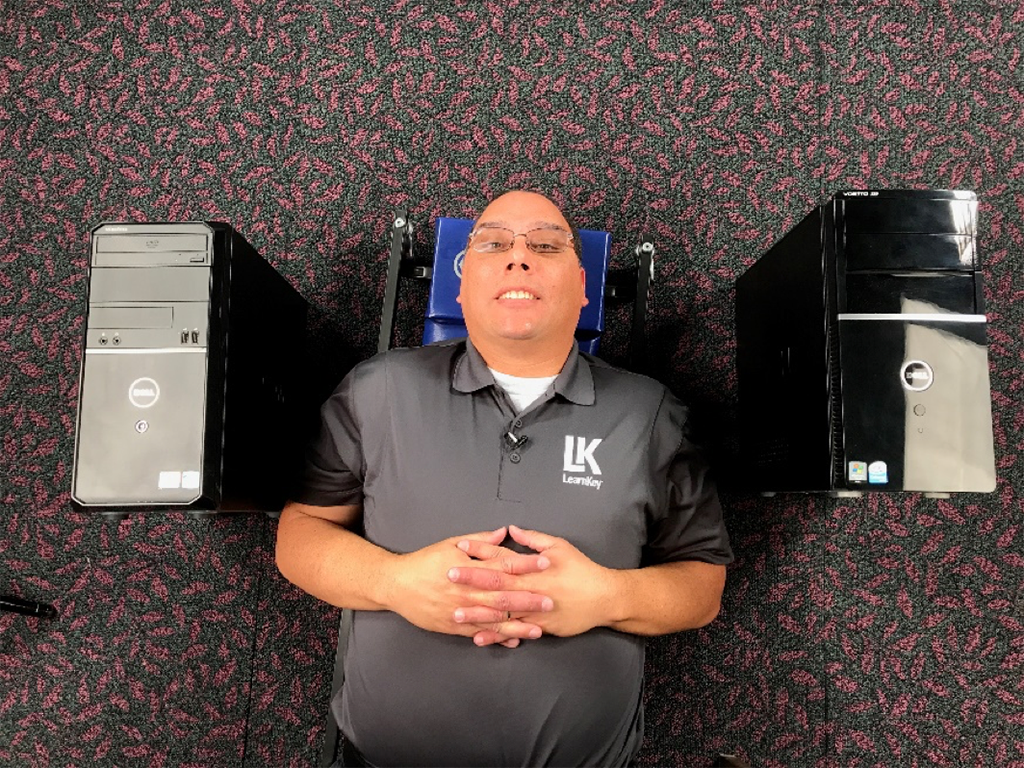
I know, I know. I haven’t been in this blog space for a while. As you can see, I’ve been lying down on the job. Well, not really. The past several weeks I’ve been doing anything but lying down as our production crew has been busy filming not one, but two new CompTIA courses: Security+, and Network+. The Security+ course, which will be out soon, is tied to the new Security+ exam, exam SY0-501. The exam covers these security topics:
- Threats, Attacks, and Vulnerabilities
- Technologies and Tools
- Architecture and Design
- Identity and Access Management
- Risk Management
- Cryptography
Security+, in my humble opinion, has really gained in importance for anyone who wants to be employable in an IT Security position. I’ve known companies to actually make this a requirement as a condition of employment, i.e., get the Security+ certification in the first 90 days to stay at the job.
The other major course we are working on is the new Network+ course, tied to exam N10-007. Again, a Network+ certification certainly helps employability, specifically in the area of network administration jobs. The Network+ course goes through these topics:
- Networking Concepts
- Infrastructure
- Networking Operations
- Network Security
- Troubleshooting
This course and exam will be out early in 2018.
By the way, which concept were we filming when I was lying down here? It is one that is actually in both the Security+ and Network+ courses. And, a certain TV character named Malcolm would get it right away. That’s your hint. The answer will come in the next blog. In the meantime, with around 1400 exam objectives between the two courses, I think I will lie down here for a just a few minutes longer and rest a little before resuming production.
New Security+ on the Way
Hello, everyone. It’s fall season here at LearnKey, and a busy fall it is going to be with many new courses on the horizon. One of the major courses we are working on (in fact we are filming this one very soon) is the brand new Security+ course, to map to the CompTIA Security+ SY0-501 exam (also brand new).
This new version of the Security+ exam really reflects the changing landscape of both security needs in an organization and the role of the Security Administrator or similar position in an organization. Today’s security administrator needs to be a very versatile individual, not only able to secure an existing IT infrastructure but be more involved in planning security, specifically as it relates to Architecture and Design and Risk Management, which, by the way, are two domains on the new Security+ exam.
The other four domains on the exam are: Technologies and Tools; Threats, Attacks, and Vulnerabilities; Identity and Access Management; and Cryptography and PKI (Public Key Infrastructure). For each of these domains, we will have comprehensive video training, pre-assessment and post-assessment tests, practice labs, and a robust project workbook, all mapped to the Security+ exam objectives. And, though I won’t reveal exactly how (you’ll have to see the course to find out) we’re going to present this in such a way as to improve your employability prospects for any junior to mid-level security administrator position, I will say this: If you want to know what it’s like the first few days on the job as a new security administrator, you’ll actually feel like you are there through this course.
Well, time for me to get back to putting the finishing touches on the material for this course. Stay tuned to this space for more updates as we will be releasing several courses this fall in the areas of IT administration and programming.
Timing is Everything – A Programming Track Update
A hearty summer greetings to you from your humble senior instructor. I have occasionally brought to you in this blog space some news about our new programming track. Well, it has officially started with last month’s release of the Introduction to Programming course, which is a course that focuses mainly on programming and design concepts.
Now, about the “timing is everything” part. In building this programming track, we were (or at least I was) trying to come up with a way to bridge the Introduction to Programming courses to some of the existing Microsoft MCSA Certifications, which are more geared for those with 1-2 years of experience in programming (or possess equivalent knowledge). And, a great percentage of you looking to explore this programming track are probably new to programming (hence the Intro to Programming course).
All that said, Microsoft is rolling out, over the next few months, four new MTA (Microsoft Technology Associate) certifications. They are:
- Exam 98-381: Introduction to Programming using Python
- Exam 98-382: Introduction to Programming using JavaScript
- Exam 98-383: Introduction to Programming using HTML and CSS
- Exam 98-388: Introduction to Programming using Java
These courses/certifications are the perfect gap between the Introduction to Programming course and the MCSA and other advanced courses we have for our programming track, which we are rolling out over the next several months. And, these courses fit in nicely with our three programming tracks: Web Development, Mobile Development, and General Languages. They mold so well, we even built a road map for you, which you will find a link to at the end of this blog.
Over the next several weeks, I will be posting blog entries for each of the courses in the programming track we are releasing this year.
You see, timing is everything.
Oh, that link: https://www.learnkey.com/careertracks/programming_and_development